

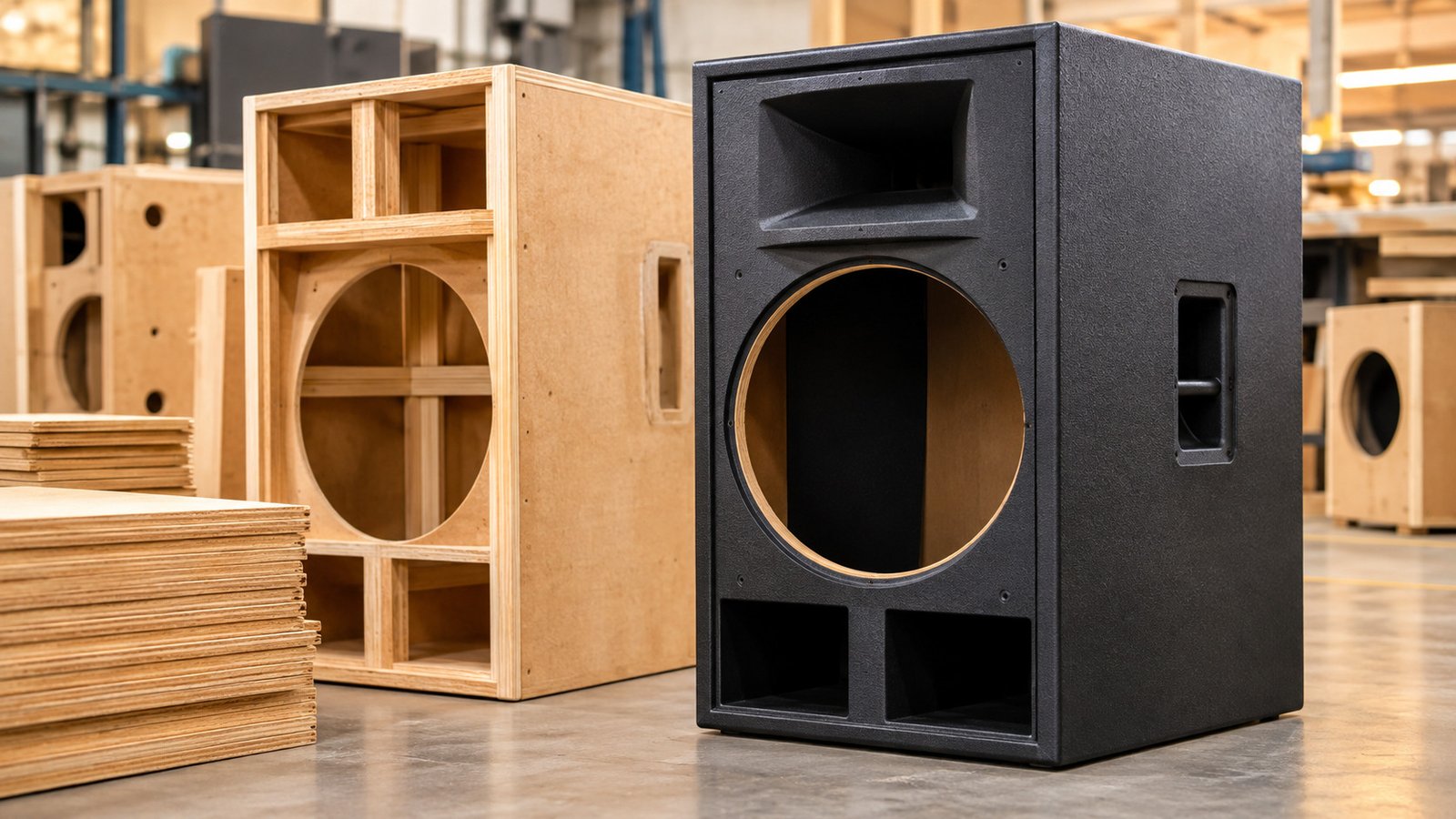
It is important to note that two speakers might utilize the same driver but still sound different. This is due to the enclosures that surround them. This is why a speaker enclosure manufacturer makes such a huge impact on the sound, durability, and price of a speaker. Poorly made enclosures can create rattles, distorted bass sounds, and damages during shipping.
Solidly built enclosures will provide good performance and service. Whether you work in an audio company, install systems, or sell boxes, a good partner can save you money and additional work. In this article you can find information about types of enclosures, the materials they are made of, and their finishing.
What Does a Speaker Enclosure Manufacturer Actually Do?
The enclosure is the box that holds the driver, which is the part that actually makes the sound. It controls airflow and protects the parts inside. A manufacturer takes your design and turns it into a finished box. That work usually covers:
-
- Cutting and shaping the panels
-
- Joining and sealing the box so no air leaks
-
- Finishing and coating the surface
-
- Fitting parts and checking quality before shipping
Each step shapes the final sound. A leaky joint, for example, can spoil the bass even when the design is perfect. One more point is worth knowing. A custom speaker enclosure manufacturer can build your drawings, while a standard supplier only sells fixed designs.
The Different Kind of Speaker Boxes
Having knowledge of acoustics may not be necessary to make the right choice. The speaker types are given below.
-
- Closed enclosure: It is a speaker box that is completely sealed. It generates tight sound, which is often used in music studios and homes.
-
- Bayport enclosure: This design has a vent that allows air to pass freely from the inside and the outside of the box. It generates louder and deeper bass sounds, making it popular in musical performances and public address systems.
-
- Trapezoidal enclosure: This type has sloped sides, which make it suitable for stage monitors and make the carrying of the speaker more convenient.
The choice is determined by where the speaker will be used. It should be appreciated that one enclosure works for a speaker used in studio settings and the other for sound on the outdoor stage.
Materials That Determine Quality and Longevity
The kind of material used in the making of a wooden speaker enclosure will dictate its sound and longevity. A simple comparison is proposed here.
-
- MDF is inexpensive, has a smooth surface, and has a constant density. Its limitation is water. If moisture gets into it, it can expand.
-
- Plywood is sturdier and lighter; it is also better at suffering blows from falls. Hence, this makes it an ideal material for tours and rough handling.
-
- Molded materials are plastic or composite types. They are suitable for lighter, weatherproof products.
Thickness and bracing are equally important as the material itself. Bracing is the internal support that stiffens the enclosure. Thin or weak panels will vibrate, resulting in sound distortion, no matter how quality the wood is.
Why the Finish Matters for Outdoor and Touring Speakers
A coating serves more than just to beautify the box. It acts as a protection for the case against water, heat, scratches, and the sun’s UV rays. Outdoor and touring speakers receive a lot of torment; hence, the coating is an integral part of the design. Durable coatings like polyurea are in high demand here.
They stand the test of moisture and impact, thus allowing the box to maintain its shape and look longer. An effective coating is capable of covering minor blemishes caused by everyday usage, letting the product keep its professional look on the stage, in the field, and in the customer’s hands.
What to Check Before Choosing a Speaker Enclosure Manufacturer
Use this short checklist when you compare suppliers:
-
- Can they build your drawings and match samples?
-
- Do they share material and finish options clearly?
-
- Do they test for air leaks and panel strength before shipping?
-
- What are their minimum order quantity and lead time?
-
- Can they handle export packing and documents for overseas orders?
A trusted manufacturer answers these questions openly and offers a sample before a bulk order. If a supplier dodges them, treat that as a warning sign. A short conversation now can save you months of trouble later.
Conclusion
If you want a smooth-sounding loudspeaker, then it is important that you have the right type of enclosure and its materials. When you search for an enclosure producer, take into account all three important aspects instead of only price. Therefore, if you have a project in mind, do not hesitate to contact Ezcom Electronics to clarify your enclosure requirements and get your quotation.
Frequently Asked Questions
What is the difference between a speaker enclosure and a speaker cabinet?
They can be interchangeable terms as well. While “enclosure” means the sealed box that creates the sound, the term “cabinet” refers to the housing that will be seen and handled.
Which is better for a speaker enclosure, MDF or plywood?
It is contingent on usage and money available. MDF works fine for indoor use and do-it-yourself projects. Plywood is more durable and stronger, so it is better for carrying it while travelling.
Can a speaker enclosure be made waterproof?
Definitely, a speaker can have this specification as long as the right material is used, sealed joints are applied, and a protective layer is applied
What should I ask a speaker enclosure manufacturer before placing an order?
Make use of samples offered, materials to be used, finishing options, minimum volume, lead times, and quality tests. It is sensible to ask for a small sample batch before ordering products in bulk.


